GEO Marketing
The Lindy Effect for Digital Reputation: Why AI Trusts History Over Hype
March 7, 2026
Key Takeaways
- • The Lindy Effect: the longer something has survived, the longer it will continue to survive.
- • AI models apply this logic to property data. A five-year history of consistent facts looks like a settled entity.
- • A sudden burst of 5-star reviews looks like a glitch. Steady, verified data over time looks like a fact.
- • You cannot growth-hack an AI recommendation. GEO authority is earned through duration, not volume.
- • Every month of consistent structured data compounds your entity authority with AI models.
- • The properties that start building digital history today will be the “safe bet” AI recommends tomorrow.
There's a concept from probability theory called the Lindy Effect. It says that the future life expectancy of a non-perishable thing (an idea, a book, a technology, a reputation) is proportional to its current age. A book that has been in print for 50 years is likely to stay in print for another 50. A restaurant that's been open for 20 years is more likely to survive the next decade than one that opened last month.
The longer something has endured, the more durable it proves itself to be. Survival is its own credential.
“You can't growth-hack an AI recommendation overnight. GEO is about building a digital history that proves your property's value over time, making you the safe bet for an AI agent to recommend.”
AI models are applying the Lindy Effect to your property right now. And most operators don't realize it.
What AI Considers “Settled” Information
Language models are trained to distinguish signal from noise. When an AI encounters property data, it's not just reading facts. It's evaluating how settled those facts appear. A property with five years of consistent structured data across its website, Google Business Profile, ILS feeds, and aggregator listings looks like a stable, trustworthy entity. The data has endured. It's Lindy.
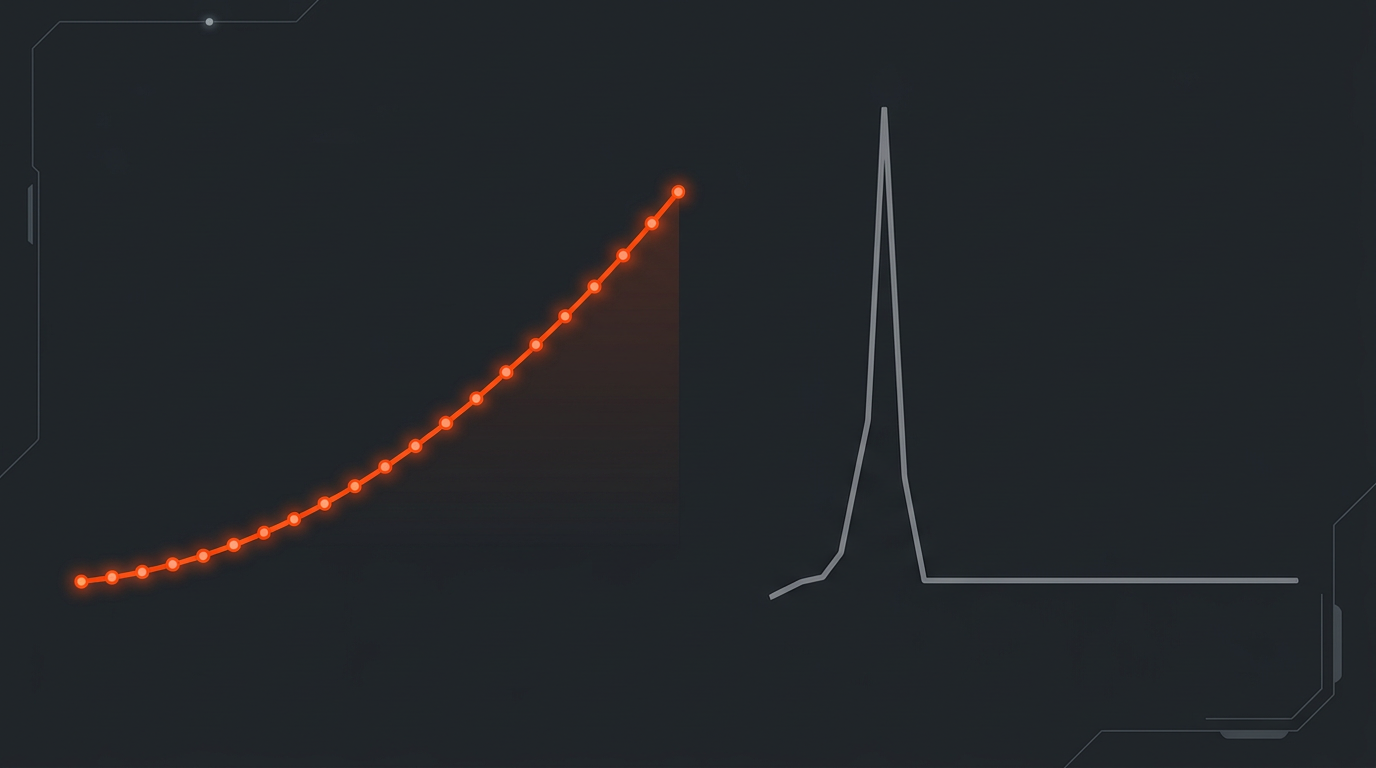
Now compare that to a property that just launched a “reputation campaign.” Thirty 5-star reviews appeared in two weeks. A new website went live last month. Schema markup was added yesterday. To a human scrolling Google, it might look impressive. To an AI model evaluating entity reliability, it looks like a spike. An anomaly. And anomalies are risky to recommend.
AI doesn't reward velocity. It rewards durability. A sudden burst of positive signals doesn't build the kind of trust that earns a recommendation. A long, consistent trail of accurate, verified data does.
Why Growth-Hacking Doesn't Work on AI
The old playbook had shortcuts. Buy backlinks. Stuff keywords. Blast review requests after a renovation. Run a PR campaign. These tactics worked in a world where algorithms counted volume and recency. Google's algorithm could be gamed, at least temporarily, because it was built to index the web, not to evaluate truth.
AI models are built differently. They cross-reference data across sources. They weigh consistency over time. They detect patterns that look synthetic. As we explored in The Invisible Filter, AI doesn't just read your star ratings. It analyzes the full texture of your digital footprint. A property with authentic, gradually accumulated reviews, stable pricing history, and consistent entity data across platforms is a safer recommendation than one with a suspiciously perfect profile that appeared overnight.
- Fake review bursts: AI detects temporal clustering. 30 reviews in two weeks after 3 reviews per month for a year is a red flag, not a boost
- Sudden schema additions: Structured data that appeared yesterday doesn't carry the same weight as markup that's been consistently present and updated
- Pricing volatility: Frequent, erratic price changes across platforms erode entity confidence rather than signaling competitiveness
- Entity inconsistency: A property whose name, address, and facts have been consistent across every platform for years has compounded trust that a newcomer cannot replicate
The Compounding Effect of Digital History
This is where the Lindy Effect becomes a strategic advantage. Every month your structured data is live, accurate, and consistent, AI models learn to trust it more. Entity authority doesn't accumulate linearly. It compounds. As we wrote in AI-First Leasing, by month three AI starts including you; by month six you're consistently in top results; by month twelve your compounded authority makes you extremely difficult to displace.
The inverse is also true. Every month you wait, you're not just “not growing.” You're falling behind properties that are compounding. The Lindy gap widens. A property that started GEO optimization six months ago has six months of compounded trust that you cannot buy, shortcut, or replicate. You can only start earning it today.
Building a “Lindy-Proof” Digital Footprint
- 1. Start with consistency, not volume. Get your core facts (rent, amenities, policies, address) identical across every platform. This is the foundation AI evaluates first.
- 2. Deploy structured data and leave it running. Schema.org markup isn't a one-time project. It's infrastructure that builds trust the longer it's present and accurate.
- 3. Earn reviews steadily, not in bursts. A consistent cadence of authentic reviews over years signals a real, operating property. Temporal clustering signals manipulation.
- 4. Update, don't overhaul. Regular, incremental updates to pricing and availability signal a living entity. Wholesale data replacements signal instability.
- 5. Think in years, not campaigns. GEO is not a Q2 initiative. It's a permanent layer of your property's digital infrastructure that gets more valuable the longer it runs.
The Bottom Line
AI rewards what has endured. A five-year history of consistent, structured, verified data makes your property the safe bet. A sudden burst of optimized signals makes it a question mark. The Lindy Effect isn't just a theory. It's the operating logic behind how AI models decide which properties to trust with a recommendation. You cannot compress time. You can only start building history now.
You can't growth-hack an AI recommendation. Every month of consistent data compounds your authority. The only shortcut is starting sooner.
Start building your digital history today.
ClyncGEO builds the structured data layer that compounds entity authority over time, making your property the safe bet AI recommends.
Get Started with ClyncGEO